
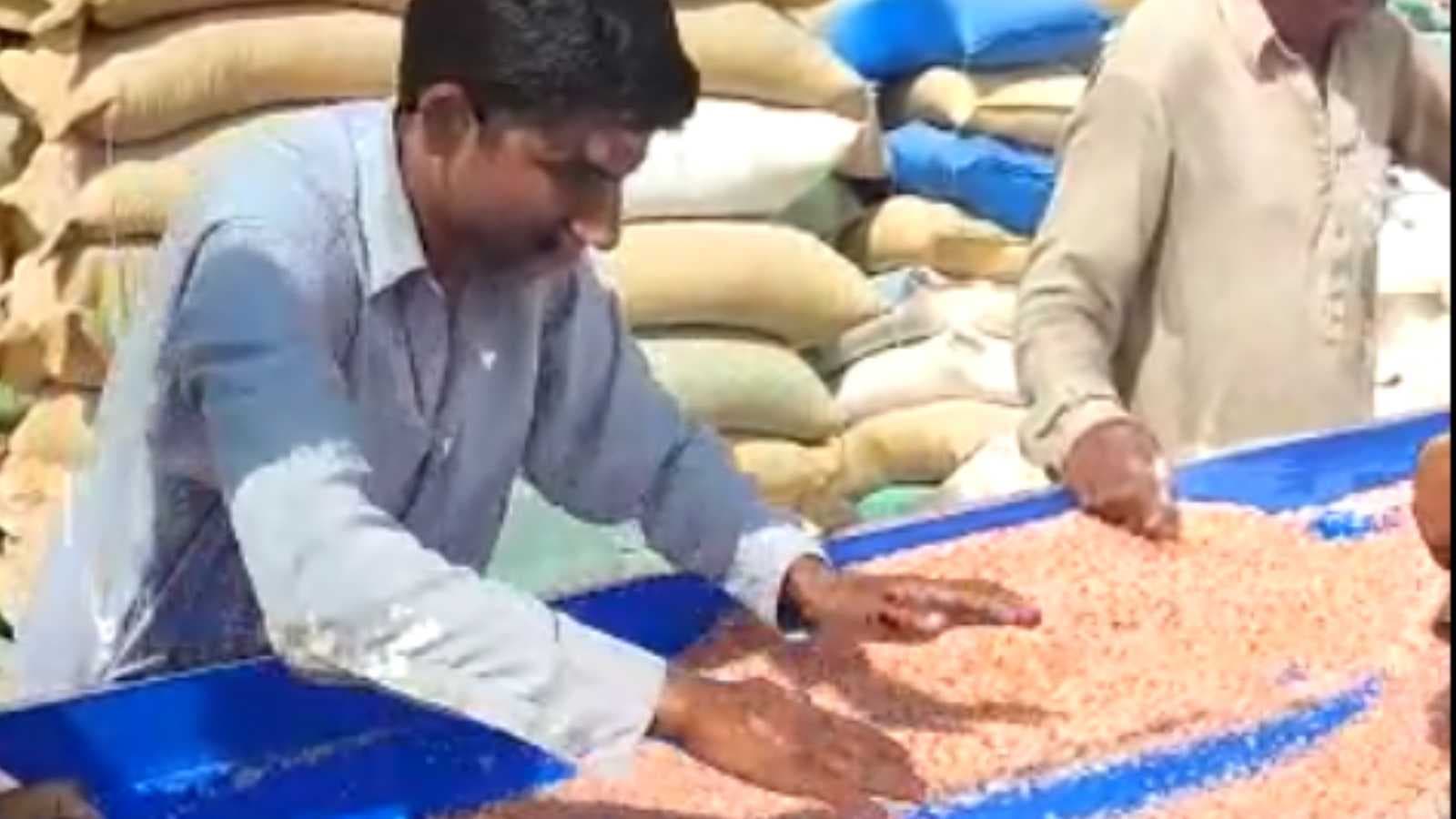
Pakistan is home to the world's second-largest salt mine and roughly 300 to 400 registered salt processing facilities. But when you start searching for "salt factory in Pakistan" online, you'll notice the same three or four names appear over and over — and they're almost always trading companies, not factories.
This guide cuts through that confusion. It explains where Pakistan's salt factories actually are, how the industry is structured, what to expect from a real factory vs. a trader, and how to negotiate directly with the source.
The Geography: Where Pakistan's Salt Industry Lives
Himalayan pink salt comes from a geological formation called the Salt Range (also spelled "Salt Ranges") that runs roughly east-west across northern Pakistan for about 300 km. Three mining regions dominate:
1. Khewra — The World's Second-Largest Salt Mine
Khewra is the origin story of Himalayan pink salt. It's located in the Jhelum district of Punjab province and produces somewhere between 300,000 and 400,000 metric tons per year. The mine itself is a tourist attraction — you can visit it and drive through tunnels lit by salt-brick lamps.
Khewra's salt is characterized by a deeper pink-to-red color and a higher concentration of iron and trace minerals. For retail buyers, "Khewra-grade" is a strong marketing term — the mine's reputation carries weight in the USA, Europe and Japan.
2. Warcha — Where Most Processing Happens
About 200 km southwest of Khewra, the Warcha mine produces a significant portion of Pakistan's export-grade salt. What makes Warcha strategically important is the industrial ecosystem that has grown around it — dozens of processing facilities, packaging plants and quality-control labs are located within a 50 km radius.
Khan Salt's own factory is located in Quaidabad, a small industrial town roughly 40 km from the Warcha mine. This proximity means shorter raw material lead times, lower logistics costs and easier oversight of quality from mine to packaging.
3. Kalabagh — The Western Edge
Kalabagh sits on the western edge of the salt range near the Indus River. It's a smaller operation than Khewra and Warcha, and its salt tends to have a lighter pink color. Less common for premium retail branding, but competitively priced for industrial and agricultural applications.
4. Karachi — The Export Gateway
Karachi isn't a mining area but it's the country's primary export hub. All Himalayan salt destined for international markets moves through one of two ports: Port Qasim or Karachi Port Trust (KPT). Both are on the Arabian Sea and serve ships bound for the USA, Europe, Southeast Asia and Australia.
When a factory quotes "FOB Karachi," they're telling you the price includes delivery to one of these two ports. CIF and DDP quotes build on top of this baseline.
How Pakistan's Salt Industry Is Structured
Understanding the industry's structure is critical for importers — because the name "Khan Salt Factory" or "Khewra Enterprises" often masks a business that doesn't actually own or operate a factory.
Layer 1: The Mines
The mines are government-leased under the Pakistan Mineral Development Corporation (PMDC) and a handful of private mining contractors. Raw rock salt is extracted in large blocks and transported to processing facilities.
For importers, this layer matters only indirectly — no one buys raw rock salt blocks from the mine. You buy processed and packaged products from a facility that buys its raw materials from the mine.
Layer 2: Processing Factories
This is where the real work happens. Processing factories wash, crush, sieve, shape, carve, dry, inspect and package salt into finished products. There are three sub-tiers within this layer:
- Full-capacity exporters (40–60 facilities): ISO, HACCP, GMP certified, monthly capacity above 200 MT, experienced with FCL container exports, own packaging lines and QC lab.
- Mid-tier processors (100–150): Domestic market focus, some export capability, often serving as subcontractors for larger exporters during peak season.
- Small workshops (150–200): Artisanal salt lamp and decorative item production, no export certifications, cash-only or domestic bank transfer.
For international wholesale buyers, only the first tier is worth engaging. This is the tier Khan Salt operates in, and it's where you should concentrate your sourcing efforts.
Layer 3: Trading Houses
Above the factories sit hundreds of small trading companies. Some are legitimate export specialists who add value (logistics coordination, documentation, buyer-side negotiation). Others are simply middlemen who add 15–25% to the factory price and hide the fact they don't manufacture anything.
A quick test: ask a potential supplier for the factory's tax registration number (NTN) and a video tour of the processing floor. A real factory provides both within 24 hours. A trading house dodges, sends stock photos, or claims "we work with multiple factories."
What a Real Salt Factory in Pakistan Looks Like
Visiting a factory is the fastest way to separate real manufacturers from traders. Here's what you should see:
- Raw material storage: large piles or blocks of raw rock salt, sorted by grade and color
- Processing line: washing, crushing, sieving and shaping equipment — the exact configuration depends on product type
- Food-grade zone (for edible lines): separate enclosed area with metal detection, magnetic separation, and stainless-steel contact surfaces
- Carving workshop (for lamps & decor): hand tools, sanding stations, and workers finishing individual pieces
- Quality control lab: moisture meters, salt purity testing, packaging integrity checks
- Packaging hall: bag filling, sealing, label application, carton assembly
- Warehouse: finished goods stacked on pallets, ready for container loading
If any of these elements are missing — especially the QC lab and separate food-grade zone — the "factory" is likely a repackaging operation rather than a true manufacturer.
Export Certifications You Should Expect
A factory equipped for international export will typically hold:
- ISO 9001:2015 — quality management system
- HACCP — food safety management (essential for edible salt)
- Halal certification — required for Middle East, Malaysia, Indonesia markets
- Kosher certification — required for USA/Israel premium retail
- FDA registration — mandatory for the US market
- USDA Organic or EU Organic — for organic retail lines
For electrical product lines (salt lamps), add CE, RoHS, UL, UKCA and SAA depending on destination market. A serious factory will show you the actual certificate PDFs — not just claim certification.
Pricing Benchmarks: What You Should Pay
Understanding fair pricing is your best defense against traders marking up factory prices by 30%. Current FOB Karachi benchmarks (2026):
- Edible Himalayan pink salt (fine 0.2 mm powder): $280–$450 per MT
- Edible coarse (2–5 mm): $320–$520 per MT
- Natural salt lamps (5–7 kg, mixed container): $6–$14 per piece
- Crafted salt lamps (globe, cube, animal shapes): $10–$25 per piece
- Animal lick salt (3 kg cylinder): $1.20–$2.50 per piece
- Salt bricks (8 x 4 x 2 inch): $3.50–$6.50 per piece
- Industrial road salt: $28–$95 per MT
Prices vary based on order volume, packaging complexity, certifications required, and payment terms. Requests for DDP or CIF add freight costs. A supplier quoting 30%+ below these ranges is cutting corners somewhere.
How to Shortlist Factories Efficiently
Rather than email 30 suppliers and manage 30 threads, use this approach:
Step 1: Search on Alibaba, TradeIndia, Europages and Google for "Himalayan salt manufacturer Pakistan" or "salt factory in Pakistan." Aim for 10–15 candidates.
Step 2: Send each one a short standardized email with 5 questions: (1) factory location, (2) monthly capacity in MT, (3) certifications held, (4) MOQ per product line, (5) sample policy. Response quality and speed tells you a lot. Expect 40% to drop off immediately.
Step 3: For the remaining 6–8, request a live video call with the factory floor visible. Verify workers, equipment and inventory. Anyone unwilling to do this call drops out.
Step 4: Shortlist 2–3 finalists. Order a trial pallet or 500 kg from each. Compare quality, packaging, documentation and delivery time. Then commit to a container with the winner.
For our own trial-order process, see the contact page. We respond within 12 business hours with pricing, MOQ and lead times.
Common Mistakes Importers Make
- Choosing the lowest price. A 25% saving on a $20,000 container saves $5,000 — but if quality fails, you've lost a season of sales and hurt your brand.
- Skipping the trial order. Always test before committing. Trial orders cost $300–$800 and save thousands in avoided mistakes.
- Not verifying certifications. Ask for the certificate number and verify with the issuing body. Fake certificates exist.
- Paying 100% upfront. Standard terms are 30% deposit + 70% against Bill of Lading copy. Never pay more than 50% before shipment.
- Ignoring documentation. The documentation package (invoice, packing list, certificate of origin, phytosanitary, health cert, lab report) is essential for customs clearance. Insist on it.