
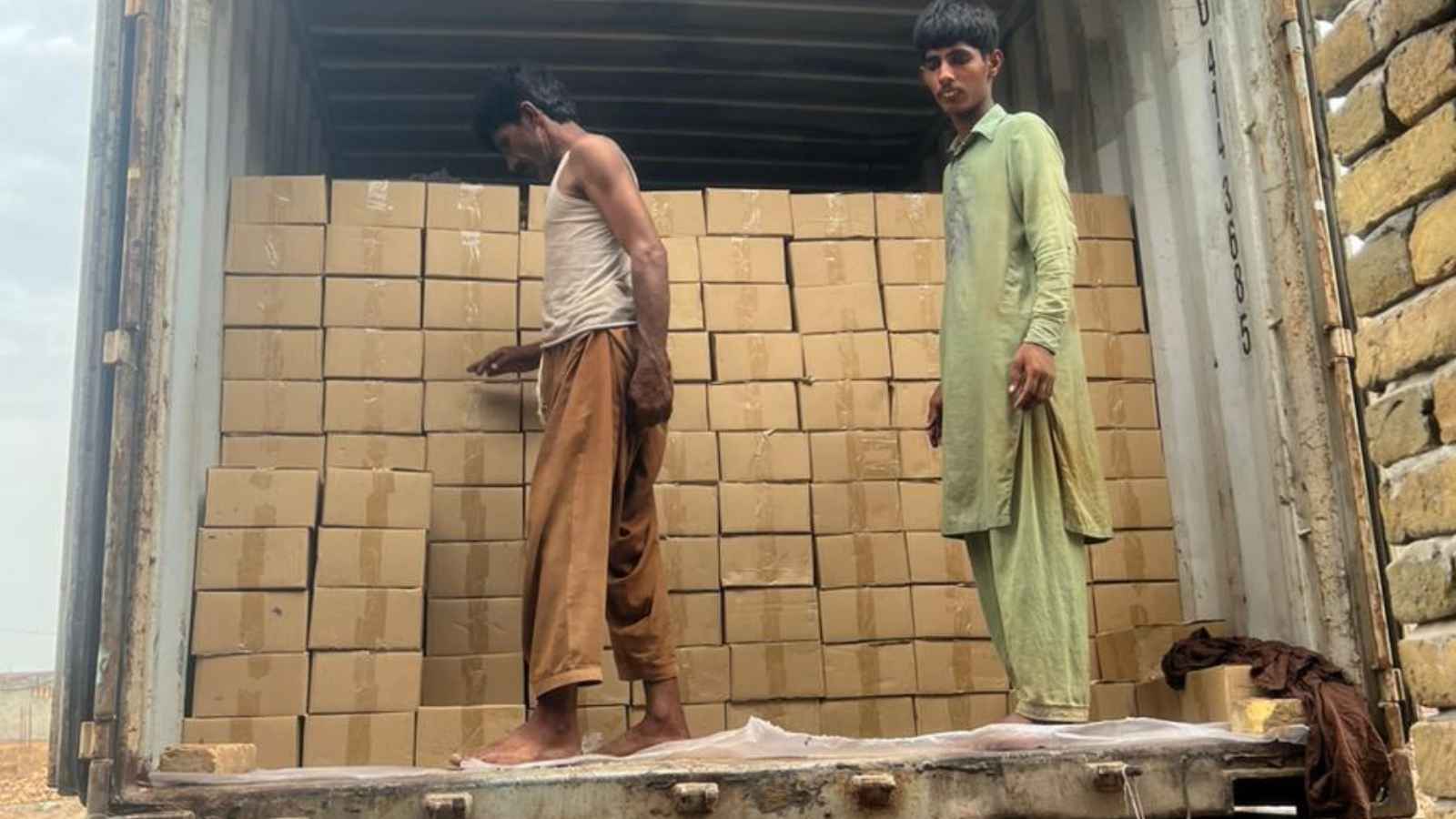
If you're importing Himalayan pink salt in any meaningful volume, you have two options: buy from a trading house (or regional distributor) that resells salt, or buy direct from a Pakistan supplier that actually manufactures it. The difference in pricing, quality control and lead time is significant.
This guide breaks down why direct-from-factory sourcing beats going through a middleman, what you gain, what you give up, and how to do it safely.
The Hidden Cost of Buying Through a Trader
A trading house exists to bridge the gap between manufacturers and buyers. They handle logistics, documentation and sometimes credit terms. In exchange, they mark up the factory price by 20–40%. On a $20,000 container, that's $4,000–$8,000 added to your landed cost.
For occasional buyers, this premium can make sense. For anyone importing more than one container per year, it becomes pure waste.
Here's what that markup actually covers:
- Their margin (typically 15–25% gross)
- Sales commission for their in-house team
- Regional warehouse costs if they stock inventory
- Compliance overhead (certifications, insurance)
- Risk buffer for QC problems they may have to absorb
When you buy direct, you skip all of this. The factory still has its own margin, but it's one layer instead of two.
Direct Sourcing Advantages — Beyond Price
Price is the most visible benefit. But three other advantages often matter more for sustained operations:
1. Quality Control You Can See
When you buy from a factory, you can:
- Request a live video call during production and inspect the actual batch being made for you
- Ask for AQL 2.5 pre-shipment inspection with photo documentation
- Request specific lab tests (SGS, Intertek) on your actual batch
- Negotiate quality specifications directly — not through 3 layers of email translation
When you buy through a trader, you're two steps removed from the production line. Trader → factory → you. Any question, request or complaint goes through an intermediary who may not fully understand the technical detail.
2. Faster Lead Times and Customization
Direct factory relationships cut 5–15 days off lead times because:
- No back-and-forth through a trader's sales team
- You talk directly to production scheduling
- Custom requests (packaging, private label, specific grading) get routed immediately
- Rush orders can be pushed through without "asking the manager" three times
This matters most when you have a retail launch deadline, or when you need to replenish inventory faster than planned.
3. Full Documentation and Audit Trail
Direct sourcing gives you direct access to:
- Factory-level certificates (ISO, HACCP, GMP, FDA, Organic)
- Batch-specific lab reports
- Packaging specifications with exact carton dimensions and weights
- Loading photos and video of the actual container
- Direct contact with QC personnel when issues arise
For buyers selling into regulated markets (US, EU, UK, Australia), this audit trail is often required by your own compliance team. Trader-supplied documentation rarely satisfies these requirements.
What You Give Up (And How to Mitigate It)
Direct sourcing isn't free of friction. Here's what you lose and how to handle it:
1. Convenience
Traders offer a single point of contact and often hold stock locally. Direct means you manage the relationship, coordinate samples, and handle shipping documentation yourself (or hire a freight forwarder).
Mitigation: For most buyers, a good freight forwarder handles 80% of the operational complexity. Khan Salt, like most Pakistani exporters, coordinates documentation directly. You or your forwarder handles customs clearance in your destination country.
2. Credit Terms
Traders sometimes offer 30–60 day terms to established buyers. Factories rarely extend credit to new customers — they typically require a deposit.
Mitigation: Once you've placed 3–5 orders, most factories will extend terms. Some accept L/C at sight which provides bank-backed assurance without direct credit risk.
3. Small Volume Flexibility
Traders will sell you 10 pallets or 5 MT. Factories usually require a full container or the higher end of the MOQ range.
Mitigation: Start with a factory that offers reasonable trial orders (Khan Salt's minimum is one pallet for most lines). Once you've validated quality and market fit, move to container ordering.
When Direct Sourcing Makes Sense (And When It Doesn't)
Direct sourcing wins when:
- You order 1+ container per year (any product line)
- You're building a brand and need reliable quality control
- You need private label / custom packaging
- Your market requires full documentation trail (USA, EU, AU)
- You want to negotiate on specifications, not just price
Direct sourcing doesn't make sense when:
- You need product in under 3 weeks (buy from a trader with stock)
- You're testing a new market with less than 500 kg
- You don't have the bandwidth to manage supplier relationships
- You need multiple product categories from multiple origins in one shipment
For most serious importers, direct sourcing pays for itself on the first full container order.
How Khan Salt Works With Direct Buyers
We built Khan Salt specifically to serve direct wholesale importers. Here's what working with us looks like:
- Response time: within 12 business hours on RFQs
- Trial orders: 1 pallet or 500 kg minimum
- Container pricing: transparent FOB Karachi quotes with optional CIF or DDP
- Samples: free product samples, buyer pays courier (credited against first order)
- Documentation: full export pack including SGS lab report, certificate of origin and phytosanitary certificate
- Private label: from 500 units per SKU, with FBA prep available
- Payment terms: 30% T/T deposit + 70% against B/L copy, L/C accepted above 20 MT
To explore our product lines, see edible Himalayan salt, natural salt lamps, or animal lick salt. To start a conversation, submit an RFQ via the contact page.
Getting Started — Your First Direct Order
The safest path from zero to full container:
Week 1: Shortlist 3–5 factories. Send standard questionnaire. Request samples and video calls.
Week 2: Review samples. Compare packaging quality and documentation. Place trial orders with 2 finalists (1 pallet each).
Week 3–4: Trial orders arrive. QC incoming goods. Compare against specification. Pick the winner.
Week 5: Negotiate container pricing, payment terms and delivery schedule. Confirm order. Factory begins production.
Week 6–9: Production, QC, packaging, container loading. Documentation prepared. Container sails from Karachi.
Week 10–14: Sea freight transit. Customs clearance at destination. Goods received.
Total time from first contact to goods received: 10–14 weeks. After the first order, repeat cycles run on 6–8 weeks because you know the workflow.